










Energy
Zimbabwe’s Predatory Fuel Price Increases Are Nothing Short of Daylight Robbery


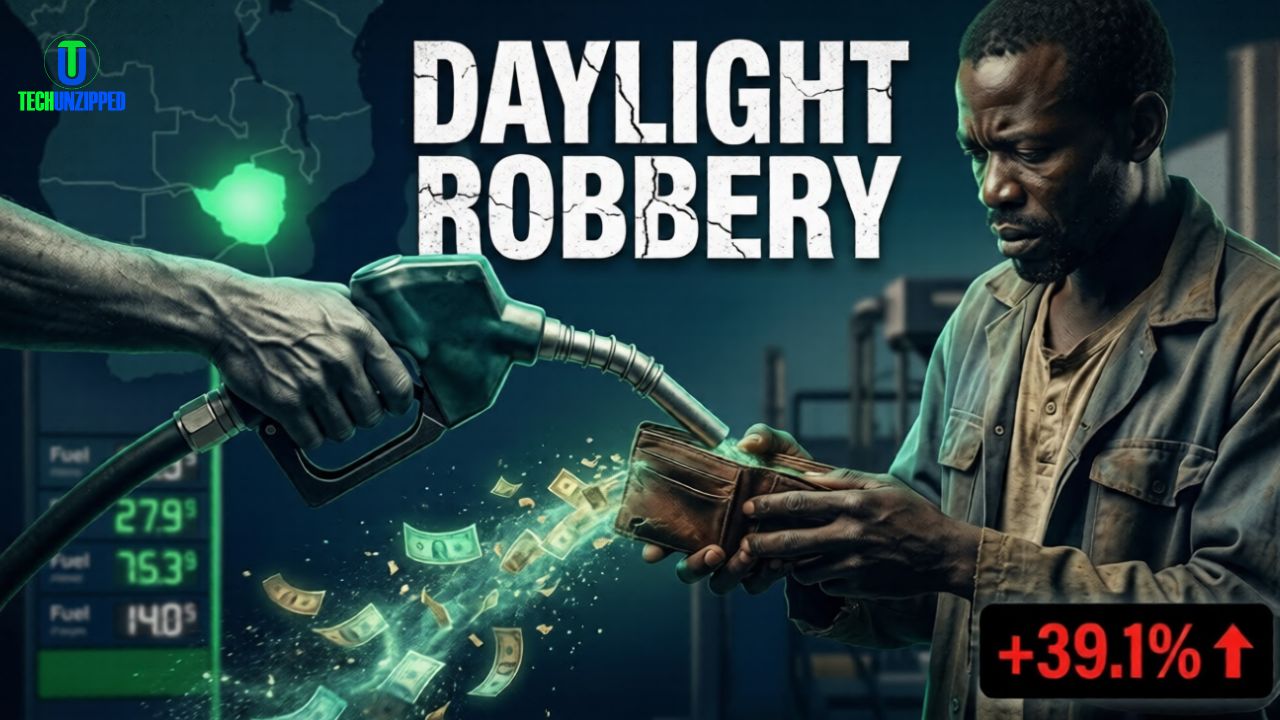
To describe the latest hike as daylight robbery is not an exaggeration but a sober assessment of a predatory pricing model that has no parallel in the Southern African Development Community. The numbers tell a far more damning story than the government wants you to hear.
While the government attempts to cloak these increases in the convenient garb of geopolitical instability in the Middle East, the numbers tell a much different and far more damning story. We are witnessing a systemic transfer of wealth from the pockets of the poor into the coffers of a greedy administration and a few well-connected individuals. The disparity between Zimbabwe and its regional neighbors is nothing short of scandalous — and the silence from civic society, the business community, and opposition politicians has been deafening.
According to data from the Zimbabwe Energy Regulatory Authority (ZERA), effective 18 March 2026, petrol blended with ethanol (Blend E5) now retails at a breathtaking US$2.17 per litre, while Diesel 50 costs US$2.05. In ZWG terms, that translates to 55.13 per litre for blend and 52.19 for diesel. These are not just numbers on a spreadsheet — they are the difference between a family eating or going hungry, a small business surviving or folding, a commuter affording transport or walking miles to work in the scorching heat.
⛽ SADC FUEL PRICE SHOCK — USD/LITRE — MARCH 2026
| Country | Jan–Feb 2026 | Mar 2026 | Change % |
|---|---|---|---|
| 🇿🇼 Zimbabwe | $1.56 | $2.17 | +39.1% |
| 🇿🇲 Zambia | $1.51 | ~$1.60 | ~+6% |
| 🇹🇿 Tanzania | ~$1.30 | ~$1.35 | ~+4% |
| 🇲🇿 Mozambique | ~$1.20 | ~$1.25 | ~+4% |
| 🇿🇦 South Africa | ~$1.04 | ~$1.06 | ~+2% |
| 🇧🇼 Botswana | ~$1.10 | ~$1.10 | 0% |
| 🇳🇦 Namibia | ~$1.12 | ~$1.15 | ~+3% |
Look at that table carefully and let it sink in. Botswana, sharing a border with Zimbabwe, has not raised fuel prices at all. South Africa, one of the most industrialised economies on the continent, managed a mere 2 percent adjustment. Mozambique and Tanzania, both far less economically developed than Zimbabwe was in its prime, squeezed by with 4 percent increases. Yet our government, in its infinite wisdom — or contempt — chose to slam ordinary Zimbabweans with an astronomical 39.1 percent jump in a single pricing cycle. The brutality of this decision cannot be overstated.
— ZERA Official Statement, 18 March 2026 — A line the government wants you to be grateful for
Read that quote again. The government is asking citizens to celebrate the fact that diesel wasn’t priced at US$2.20, as if US$2.05 is somehow a gift. This is the intellectual audacity of a regime that has normalised crisis and expects gratitude for making that crisis marginally less catastrophic. This is not intervention — it is the state holding a gun to your head and asking you to thank them for using only one bullet.
▌ The ZERA Price Build-Up: A Closer Look at the Numbers
The ZERA fuel price build-up document, dated 18 March 2026, provides a forensic breakdown of how the final price is calculated. Let us walk through it and ask some hard questions that no official has been pressed to answer.
📊 ZERA PRICE BUILD-UP — BLEND E5 (USD/LITRE)
The single most glaring figure in that table is the taxes and levies line: a colossal $0.857 per litre on Blend E5 alone. On a commodity that every sector of the economy depends upon — from agriculture to haulage to public transport — the government is extracting nearly 40 cents on the dollar in pure tax. This is obscene. It is especially obscene during what ZERA’s own statement acknowledges is a period of acute cost pressure and supply strain.
🔍 The Questions That Demand Answers
Why are we not reducing fuel taxes during a declared supply crisis? Globally, when governments face fuel crises, the first and most logical intervention is a temporary tax cut or duty suspension. South Africa has done it. Kenya has debated it. India has implemented strategic excise cuts during oil price spikes. Zimbabwe’s government, instead, maintains a swollen tax and levy burden that inflates the pump price by nearly a dollar per litre. If the government is genuinely concerned about the impact on mining, agriculture, and transport — as ZERA’s statement claims — then reducing the tax burden is the most immediate and effective relief mechanism available. So why has that conversation not even started?
The uncomfortable answer is that fuel taxes are a cash cow. They are easy to collect, difficult to evade, and politically less visible than income taxes. In a country where formal tax collection is chronically weak, fuel levies have become a silent extraction machine that punishes every Zimbabwean who breathes, eats food transported on trucks, or travels to work.
▌ Why Aren’t We Buying From Angola and Namibia?
ZERA’s statement mentions that the government is “opening up supply routes not affected by the current conflict in the Middle East” and has, with immediate effect, approved the importation of diesel by road in addition to pipeline and rail. These are positive-sounding measures. But they raise a far more fundamental question that nobody in authority seems willing to confront: Why is Zimbabwe still tethered to Middle Eastern oil at all, when viable African alternatives exist at our doorstep?
Angola is one of Africa’s largest oil producers. It pumps over 1.1 million barrels of crude per day and is a fellow SADC member state. Angola has its own refinery capacity and has historically sold petroleum products to neighbouring countries. Yet Zimbabwe has never meaningfully explored a direct, bilateral, government-to-government fuel supply arrangement with Luanda. Why not?
Namibia has fuel prices among the lowest in the region — sitting at approximately $1.15 per litre in March 2026, a full dollar cheaper than Zimbabwe. Namibia sources its fuel efficiently and taxes it responsibly. Walvis Bay is a functioning deep-water port with established logistics corridors into the SADC hinterland. Zimbabwe has road and rail links that could, with political will, enable bulk fuel imports from the Namibian supply chain. The question is not logistics — it is political will.
Mozambique’s Beira corridor is already Zimbabwe’s primary pipeline route, but Zimbabwe could be diversifying aggressively. The Lobito Corridor — a revitalised rail line connecting Angola’s Atlantic coast through Zambia to Zimbabwe’s border — is being heralded as one of the most transformative infrastructure projects on the continent. Is Zimbabwe engaging with Angolan authorities to position itself as a beneficiary of cheaper Angolan oil delivered via this route? There is no public evidence that it is.
Instead, our government appears content to perpetuate a procurement model that routes fuel through intermediaries, international traders, and pipeline arrangements that — whether by design or incompetence — produce some of the most expensive fuel prices in the entire continent. Every dollar above the regional average that Zimbabweans pay at the pump is a dollar that could have stayed in their pockets, in their businesses, in their children’s education. It is a dollar stolen by policy failure and, increasingly, by what looks very much like deliberate extraction.
▌ The Ethanol Blending Scandal Hidden in Plain Sight
The ZERA price build-up reveals another troubling detail that deserves far more scrutiny than it has received: the ethanol cost for the Blend E5 product is listed at $1.10 per litre. The blend ratio is only 5 percent, meaning for every litre of Blend E5, only 50ml is ethanol. Yet the ethanol cost component is cited at $1.10 — a figure that is wildly disproportionate to what a 5% ethanol blend should cost if Zimbabwe’s domestic ethanol producers were supplying at competitive prices.
This raises urgent questions about who is supplying Zimbabwe’s blending ethanol, at what price, and who benefits from the premium. The green fuel programme was sold to Zimbabweans as a mechanism to reduce dependence on imported fuel and lower costs. If the ethanol component is now contributing to making our blend more expensive than our diesel, the programme has either failed spectacularly or become a vehicle for rent extraction by politically connected players in the ethanol supply chain.
— ZERA Statement, 18 March 2026 — Mitigation that leaves those sectors paying 39% more
▌ The Cascading Cost of Fuel: It Is Never Just About Fuel
There are people in Zimbabwe today who will read about this price increase and think: “I don’t drive, so this doesn’t directly affect me.” They are wrong. Every loaf of bread, every kilogram of mealie meal, every tomato in a market stall, every bus fare from Mbare to town — every single one of these costs is now going to rise. Fuel price increases are not isolated economic events. They are inflationary tsunamis that radiate through every supply chain, every household budget, every small business margin. The farmer who uses diesel to run his irrigation pump will charge more for his produce. The trucking company that hauls goods from Beira to Harare will add a fuel surcharge. The commuter omnibus operator will increase fares. And the person who can least afford it — the street vendor, the domestic worker, the pensioner — will bear the greatest relative burden.
For a government that routinely invokes the suffering of ordinary Zimbabweans in its political messaging, this level of indifference to the real-world consequences of fuel pricing is staggering. It suggests either a profound disconnection from economic reality or a cynical calculation that ordinary citizens will absorb the pain in silence, as they have so many times before.
📢 What Must Happen — Now
- Immediate tax and levy review: The government must publish a full, transparent breakdown of every tax and levy embedded in the fuel price and justify each one. Any levy that is not ring-fenced for a specific public good must be suspended during the current crisis period.
- Bilateral supply negotiations with Angola: The Ministry of Energy must table, within 30 days, a report on the feasibility of a direct government-to-government fuel supply deal with Angola, leveraging SADC frameworks and the emerging Lobito Corridor logistics route.
- Diversify import routes urgently: The Namibian supply option via Walvis Bay must be costed and piloted. Dependence on the Beira pipeline as the primary artery is a structural vulnerability that costs Zimbabwe hundreds of millions annually in logistics premiums.
- Full audit of the ethanol blending programme: Who supplies ethanol to the blending programme? At what price? Under what contracts? These questions must be answered publicly and the answers must be verifiable. If the green fuel programme is enriching a few at the expense of the many, it must be reformed.
- Parliamentary oversight, immediately: The National Assembly’s Portfolio Committee on Energy must summon ZERA and NOIC executives to account for the pricing model, the procurement decisions, and the supply chain failures that have produced the most expensive fuel in the region.
▌ The Bottom Line
Zimbabwe is not facing a fuel crisis because of the Middle East. The Middle East is a convenient excuse for a structural failure that has been building for years: a government that over-taxes fuel, an energy authority with insufficient independence to push back, a procurement model riddled with middlemen and opacity, and an almost complete absence of strategic thinking about regional energy partnerships that could fundamentally reduce the cost of fuel for every Zimbabwean.
A 39.1 percent fuel price hike in a single cycle, at a time when our neighbours are absorbing the same global pressures with single-digit increases, is not bad luck. It is bad governance — and potentially something much worse. The people of Zimbabwe deserve better than to be milked at the pump while being told to be grateful the bullet wasn’t bigger. The time for polite concern is over. The time for accountability has arrived.


When not expelling tech wisdom, Ngoni feeds on good stories that strike on all those emotional chords. He loves road trips, a good laugh, and interesting people.