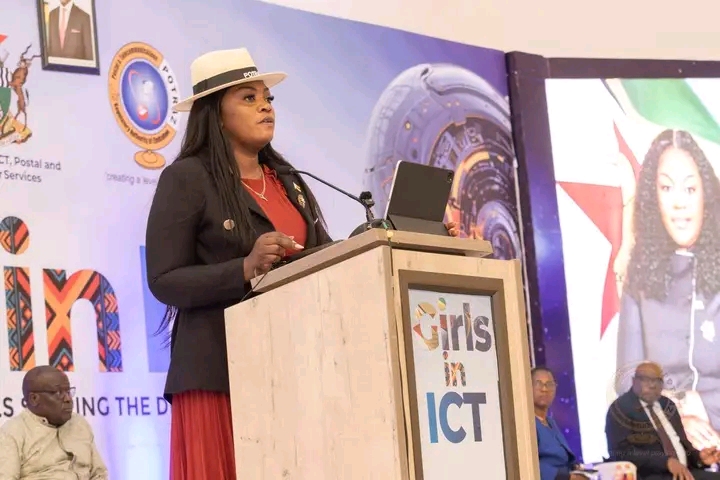
Zimbabwe has kicked off its National Artificial Intelligence (AI) Strategy (2026-2030). This plan focuses on putting young girls at the heart of the country’s push towards digital growth and economic change.
During the International Girls in ICT Day at the National University of Science and Technology (NUST), ICT Minister Tatenda Mavetera stressed the importance of making sure gender gaps don’t widen in this digital age. “The big question is: who’s behind the coding and system building?” Minister Mavetera addressed the crowd of students, mentors, and supporters. “Zimbabwe’s response must be clear: our girls should lead this transformation.”
Making public services more efficient for citizens. Minister Mavetera pointed out that these advances would miss the mark if women and girls are left out, emphasizing that this digital revolution should be the “greatest equalizer of our generation” to reach a prosperous society. ### 🛠️ Mass Training and Inclusion To close the digital skills gap, the government is launching several national programs. Focused training to tackle new digital threats.
The Minister encouraged girls to actively chase careers in fields like machine learning, robotics, data science, and AI ethics. She mentioned that local infrastructure, boosted by cloud computing and the High Performance Computing Centre, is ready to support emerging tech businesses. The strategy requires all AI systems to be designed with a focus on people, transparency, and fairness. With backing from the UN Resident Coordinator Edward Kallon and partnerships with POTRAZ and the She Tech Initiative, the message is clear: innovation is thriving in Zimbabwe, not just in big tech centers abroad.